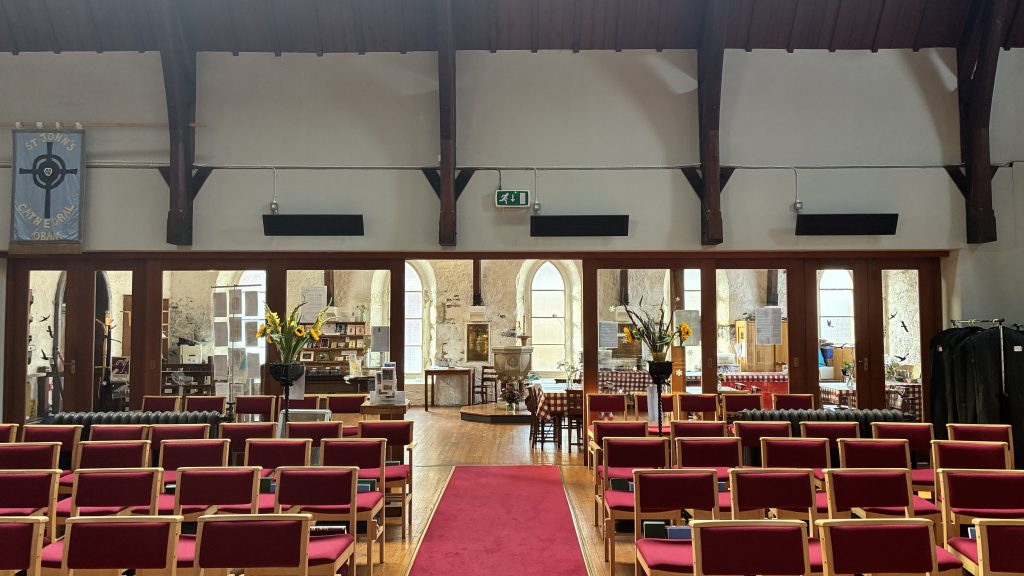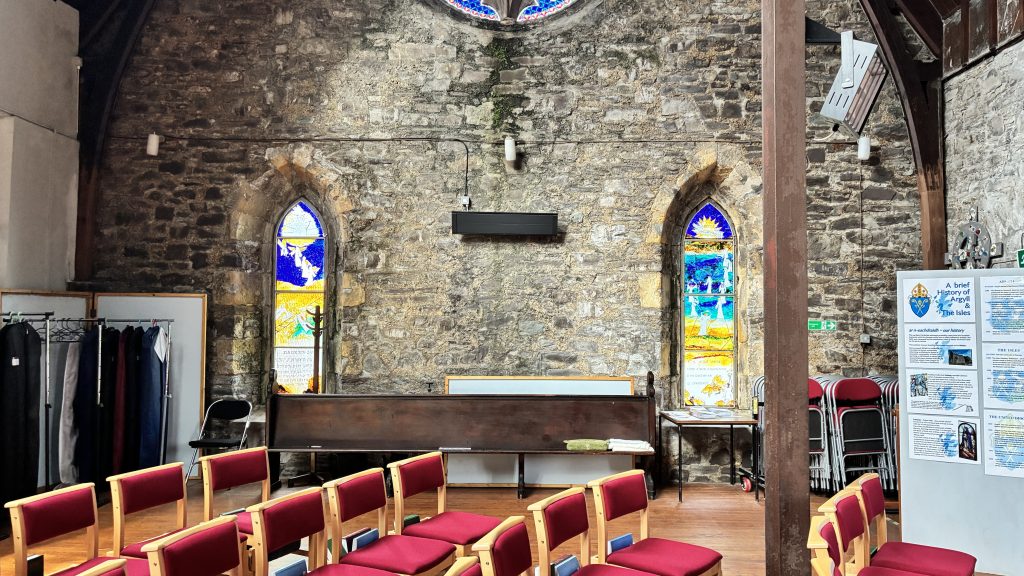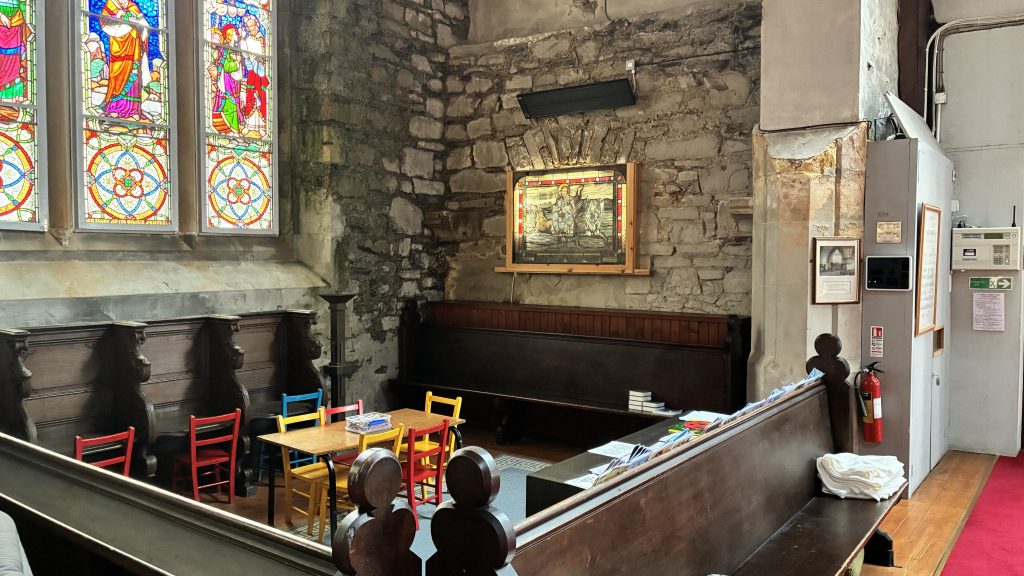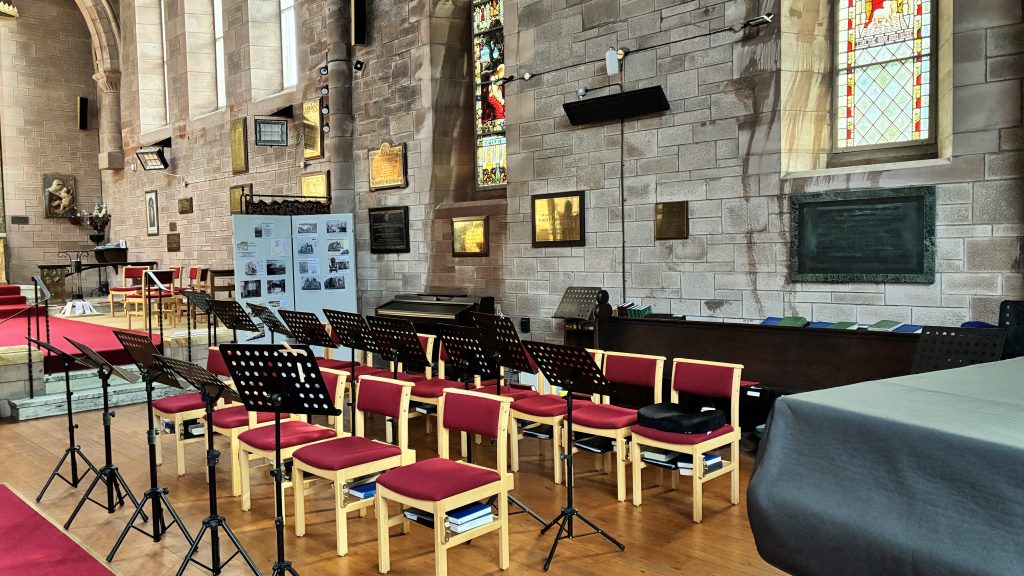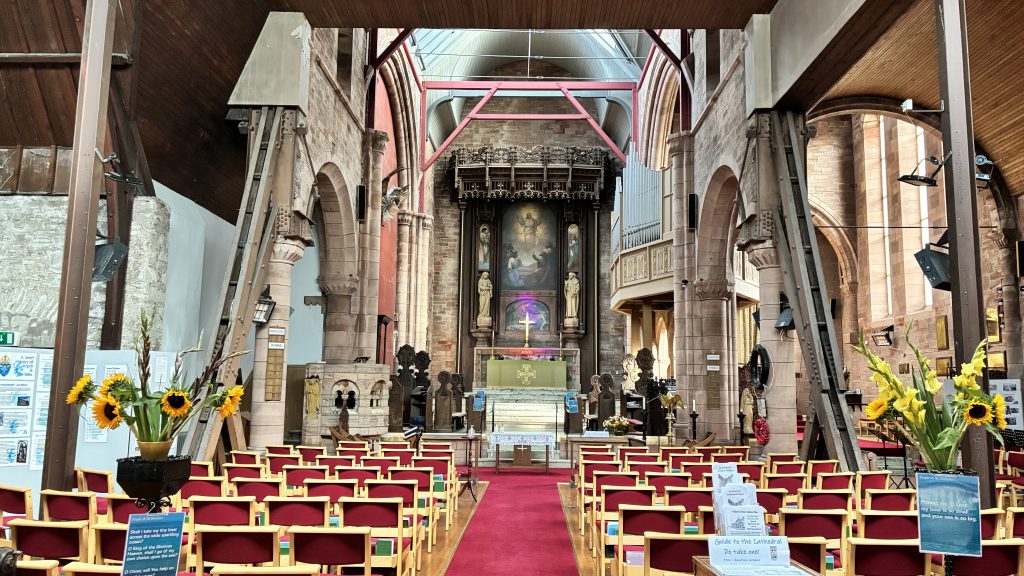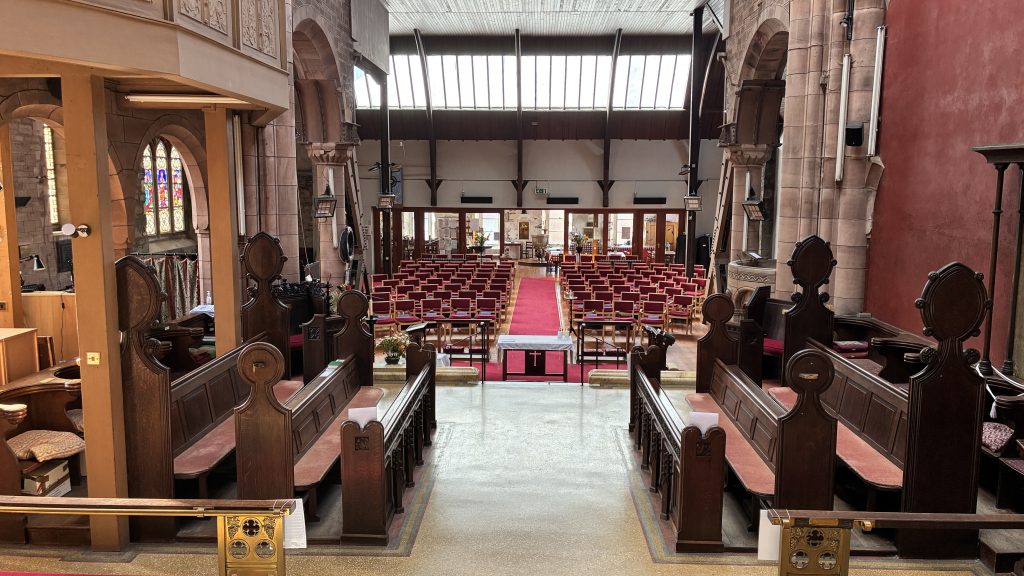
Heating a historic cathedral is rarely straightforward. High ceilings, large volumes of air and traditional building materials can make conventional heating slow, expensive and difficult to control.
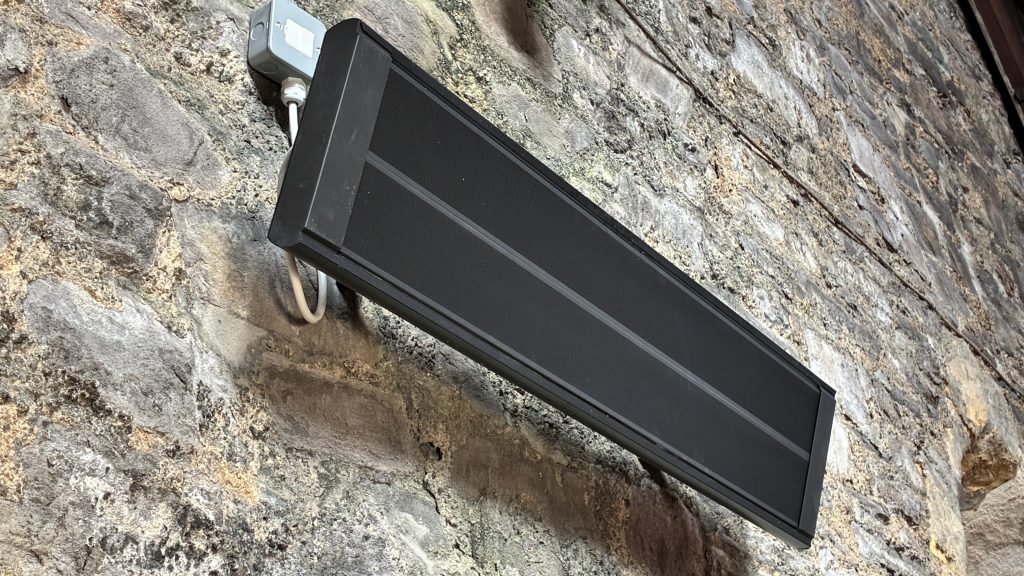
At St John’s Cathedral in Oban, Flexel EcoSun TH infrared heaters have been used to provide a more targeted approach.
The project began with a trial installation in the Cathedral’s entrance meeting and servery area. Following the success of this initial installation, Flexel was invited back several months later to survey the main nave.
The result is an excellent example of how infrared church heating can be introduced gradually and designed around the way different areas of a historic building are actually used.
A Historic Cathedral in the Heart of Oban
The Cathedral Church of St John the Divine has been part of Oban for more than 160 years.
The congregation was first gathered in 1846, when Oban was still a village and the site of the present Cathedral was open land. The central section of the building was completed in 1864.
Further development followed. A south aisle was added in 1882 and ambitious plans were later drawn up for a much larger cathedral.
However, construction stopped in 1910 when funding was exhausted. By that stage, the Sanctuary, Chancel, one Transept and one bay of the Nave had been completed and incorporated into the earlier building.
In 1920, St John’s became the Cathedral of the Diocese of Argyll and The Isles within the Scottish Episcopal Church.
The result is a fascinating historic building. However, its scale, construction and high internal spaces also create significant heating challenges.
Why Are Cathedrals Difficult to Heat?
Traditional churches and cathedrals can be some of the most challenging buildings to heat effectively.
Conventional heating systems generally rely heavily on warming the surrounding air. In a building with a very high ceiling, this means trying to raise the temperature of an enormous volume of air.
Warm air also rises. Therefore, a significant amount of heat can accumulate high above the congregation rather than where people are sitting.
Historic buildings can add further challenges. Thick stone walls, large windows, draughts and relatively low levels of insulation can all contribute to high heat loss.
Many churches are also used intermittently rather than continuously.
Heating the entire building for a short service, meeting or community event can therefore require a considerable amount of energy.
This is where a more targeted approach to church heating can offer advantages.
Starting With an EcoSun TH Trial
Rather than immediately changing the heating throughout the Cathedral, the project started with a smaller trial.
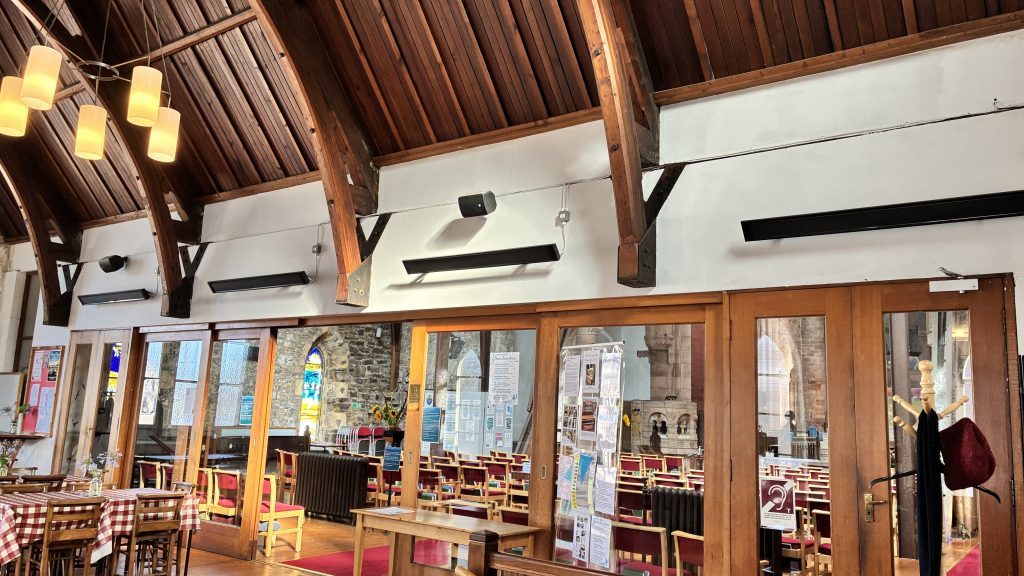
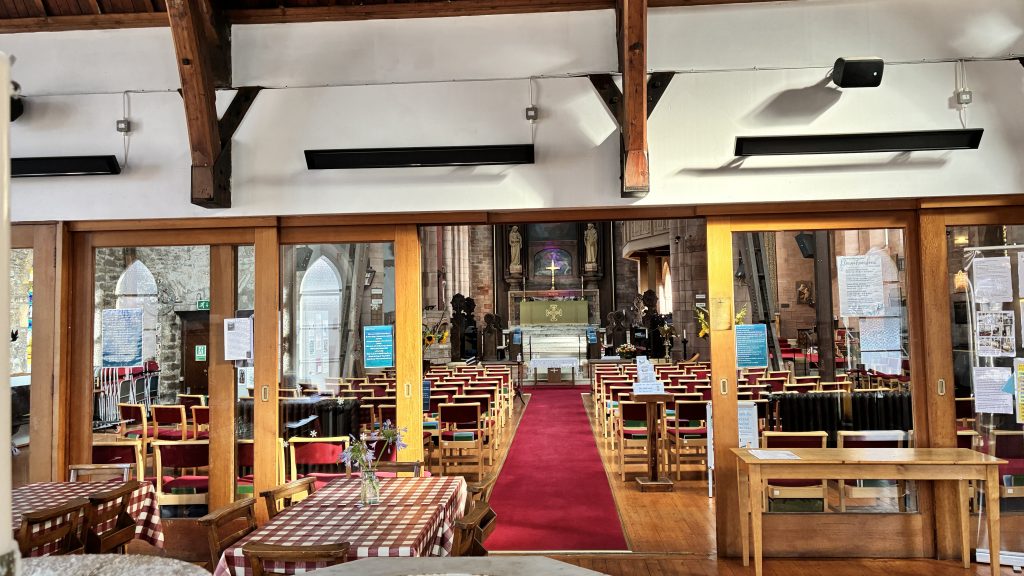
Flexel EcoSun TH infrared heaters were installed in the entrance meeting and servery area.
This space is particularly important because it is more than simply an entrance. It is used as a meeting and congregation area and provides a useful environment in which to assess the performance of the heating.
Infrared heating works differently from a conventional convection-led system.
The EcoSun TH produces directional radiant heat towards the occupied area. Instead of relying solely on raising the temperature of the complete volume of air first, radiant energy warms people and surrounding surfaces within its effective area.
This makes the technology particularly interesting for large or high-ceilinged buildings.
The TH also produces no visible glow, an important consideration inside a historic and architecturally significant building.
From a Small Trial to the Main Nave
Several months after the initial installation, Flexel was invited back to look at the next stage of the project.
The Very Rev’d Canon Margi Campbell, Provost of St John’s Cathedral and Dean of Argyll and The Isles, invited Flexel Regional Manager Craig Herriott to survey the main nave.
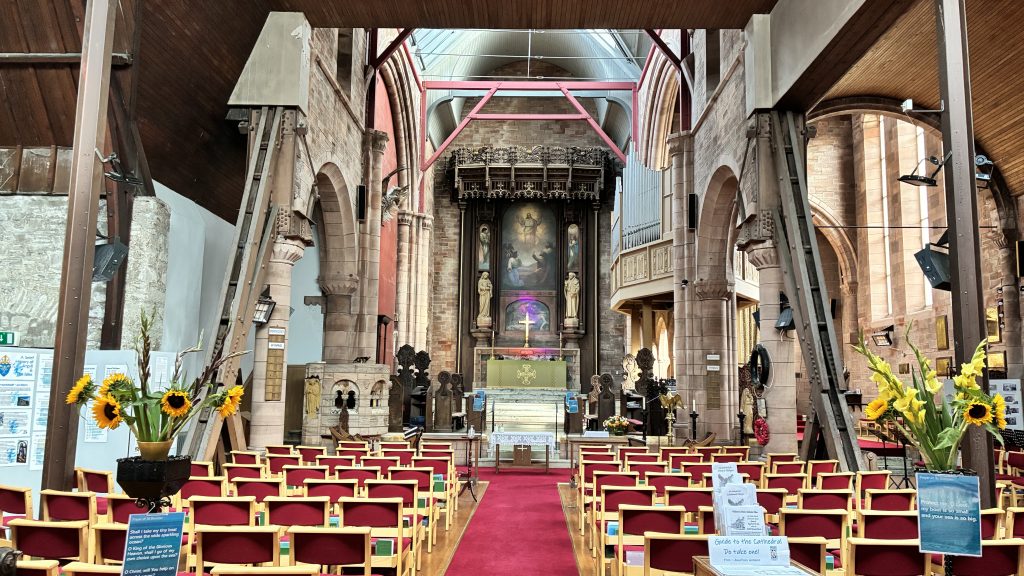
The nave presented a very different challenge from the smaller meeting area.
Its height and scale make attempting to heat the entire air volume particularly demanding. Instead, the Flexel survey considered where heat was actually required and how the directional output of the EcoSun TH heaters could be used to improve comfort within occupied areas.
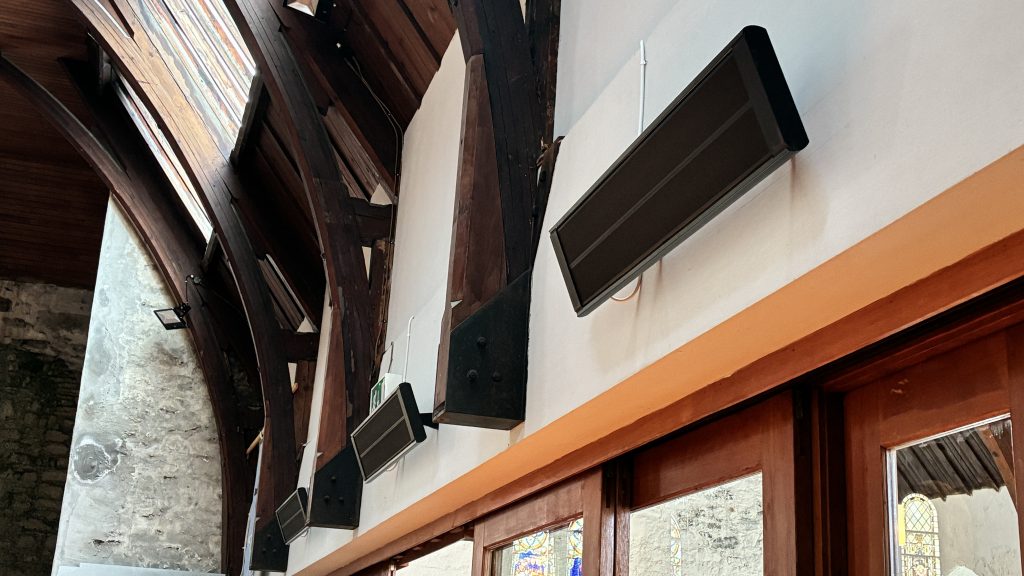
Following the survey and heating design, further EcoSun TH heaters were installed within the Cathedral nave.
This created an infrared heating solution across two very different areas of the same historic building.
Targeting Heat Where It Is Needed
One of the main advantages of infrared church heating is the ability to think differently about comfort.
The objective does not always need to be heating every cubic metre of a cathedral to the same temperature.
Instead, heaters can be positioned and directed towards the areas where people gather.
This can be particularly useful in churches that host a mixture of activities, including:
- Sunday services
- smaller weekday services
- meetings
- coffee mornings
- community events
- concerts
- visitor activities
Different spaces may be occupied at different times.
A zoned and targeted heating strategy can therefore help avoid unnecessary heating of areas that are not being used.
Why the EcoSun TH Was Suitable
The EcoSun TH high-output infrared heater is designed for applications where directional radiant warmth is required.
For a church environment, several characteristics are particularly useful.
No Visible Glow
The heater operates without the bright red or orange glow associated with many shortwave infrared heaters.
This helps the installation remain less intrusive within a traditional church interior.
Directional Radiant Heating
Heat can be directed towards occupied areas rather than relying on convection to distribute warm air throughout the complete building.
Wall or Ceiling Installation
The TH can be installed on walls or ceilings, allowing the heating design to respond to the architecture and available mounting positions.
Silent Operation
There are no fans required to distribute heat around the building. This is particularly important during worship, music and quiet reflection.
Suitable for Intermittent Use
Radiant heating can provide useful warmth without requiring the complete building air volume to be brought up to temperature first.
That makes it particularly relevant to buildings that may only be occupied for certain periods during the week.
A Practical Approach to Historic Church Heating
The installation at St John’s Cathedral also demonstrates an approach that other churches could consider.
A complete heating project does not necessarily need to start by replacing everything at once.
Beginning with a specific area can allow a congregation to assess how infrared heating performs within its own building.
If the results are encouraging, the system can then be extended following a detailed heating survey and design.
At St John’s, that meant starting in the smaller entrance meeting area before later progressing into the much larger nave.
For churches considering changes to ageing gas, electric convection or other traditional heating systems, this type of phased approach can help inform future decisions.
Free Church Heating Surveys From Flexel
Every church building is different.
Ceiling height, construction, seating arrangements, mounting positions, electrical capacity and patterns of use should all be considered before selecting a heating system.
Flexel can provide a free church heating survey and design service to help churches assess their options.
Our team can visit the building, discuss how individual areas are used and recommend suitable infrared heating products and positioning.
Solutions can range from high-output EcoSun TH and EcoSun S+ heaters to dedicated pew heating and other localised infrared heating systems.
The aim is simple: provide heat where people need it, when they need it, without unnecessarily heating unused space.
If your church, chapel or historic building is reviewing its existing heating system, contact Flexel to discuss a free heating survey and design.