
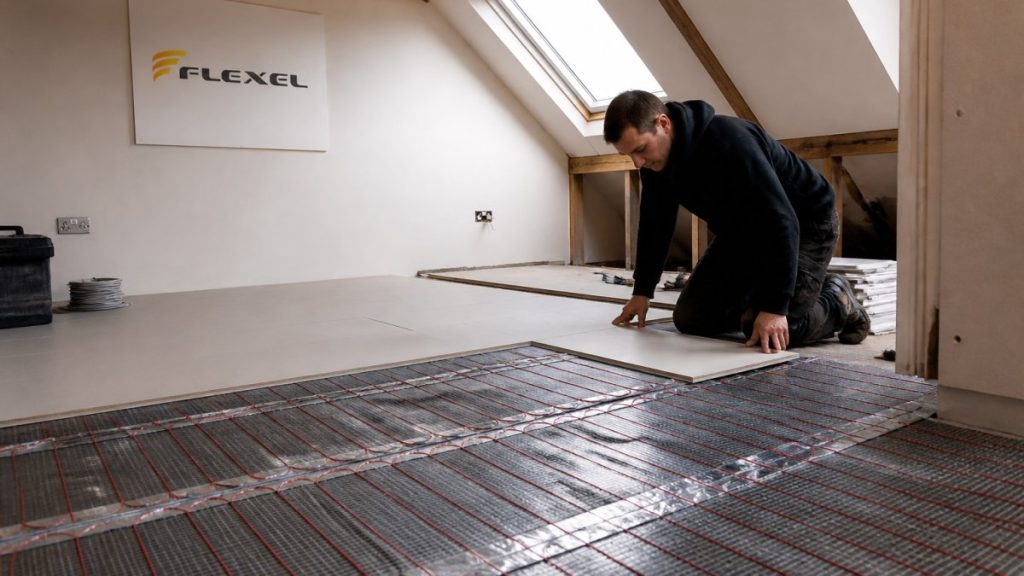
Table of Contents
- Why underfloor heating works well in loft conversions
- Types of underfloor heating suitable for loft spaces
- Underfloor heating on timber floors: what you need to know
- Understanding underfloor heating floor build-up requirements
- Can you install underfloor heating under carpet?
- Underfloor heating versus radiators for loft conversions
- Key factors to evaluate before installation
- Getting a quotation for your loft conversion heating
- Frequently Asked Questions
Last Updated: October 26, 2026
Why underfloor heating works well in loft conversions
Loft conversions present unique heating challenges. Traditional radiators consume wall space and create uneven warmth distribution in sloped ceilings. Underfloor heating delivers heat directly from below.
The technology works by warming the floor surface itself, which then radiates heat upward.
Loft spaces also benefit from radiant systems. Heat rises naturally.
Types of underfloor heating suitable for loft spaces
Electric underfloor heating is one option to consider for a loft conversion.
Underfloor heating on timber floors: what you need to know
Wood expands and contracts with temperature changes.
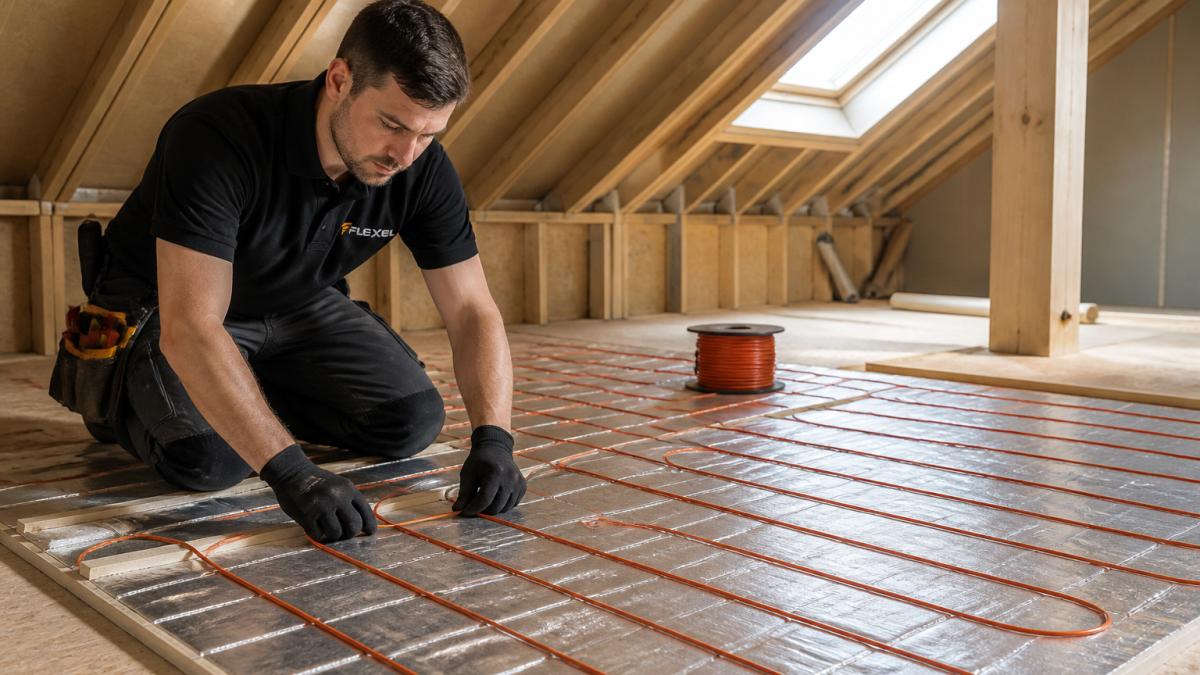
Timber loft conversions also need careful thermostat placement. Position sensors away from direct sunlight and draughty areas to ensure accurate temperature reading. This prevents the system from overheating or underheating your space.
Understanding underfloor heating floor build-up requirements
Floor build-up refers to the layered structure beneath your finished floor surface.
Floor Construction Details For Underfloor Heating explains the specific requirements for different subfloor materials. Choosing the correct product depends entirely on your existing structure and chosen floor covering.
Can you install underfloor heating under carpet?
Hard flooring materials, tile, stone, vinyl, engineered wood, perform best with underfloor heating. They conduct and radiate heat efficiently, maximising the system’s effectiveness and your comfort.
Different floor coverings conduct heat with varying efficiency when paired with underfloor heating.
Floor material | Heat conductivity | Suitability |
|---|---|---|
Tile | High | Performs best |
Stone | High | Performs best |
Vinyl | High | Performs best |
Engineered wood | High | Performs best |
Carpet | Low | Not recommended |
Underfloor heating versus radiators for loft conversions
Radiators and underfloor heating serve the same purpose but operate very differently.
Running costs depend on system efficiency and usage patterns.
Key factors to evaluate before installation
Before committing to an underfloor heating loft conversion, assess practical considerations.
How to Install Electric Underfloor Heating: A Step-by-Step Guide provides detailed installation guidance once you’ve selected your system type.
Getting a quotation for your loft conversion heating
Obtaining a quotation requires providing information about your loft project.
Electric Underfloor Heating Systems showcases the full range of heating products available for different loft applications.
Underfloor Heating & Infrared FAQs answers common questions about system selection and performance.
Infrared Heating Design Services
To get started, request a free quotation.
To discuss your next project Contact Us to get the conversation started.
Flexel: Heating people first since 1978
Frequently Asked Questions
Is underfloor heating suitable for a loft conversion?
Underfloor heating delivers warmth from below. Whether it is suitable for a loft conversion depends on the project.
Can underfloor heating be installed over a timber loft floor?
Whether electric underfloor heating can be installed over a timber loft floor depends on the project.
Does underfloor heating need extra floor build-up in a loft?
The floor build-up depends on your system choice and project.
What makes underfloor heating different from radiators in a loft conversion?
Underfloor heating warms the floor surface, which then radiates heat upward.
To discuss your next project Contact Us to get the conversation started.
Flexel: Heating people first since 1978