
Table of Contents
- Why Infrared Panels Suit Listed Buildings
- Infrared Heating for Listed Buildings: Consent and Compliance
- Wall-Mounted vs Ceiling-Mounted Infrared Panels: Which Works Best
- Infrared Panel Placement for High Ceilings and Period Rooms
- Key Features to Look For in Infrared Panels
- Installation and Integration with Existing Systems
- Frequently Asked Questions
Last Updated: October 18, 2026
Why Infrared Panels Suit Listed Buildings
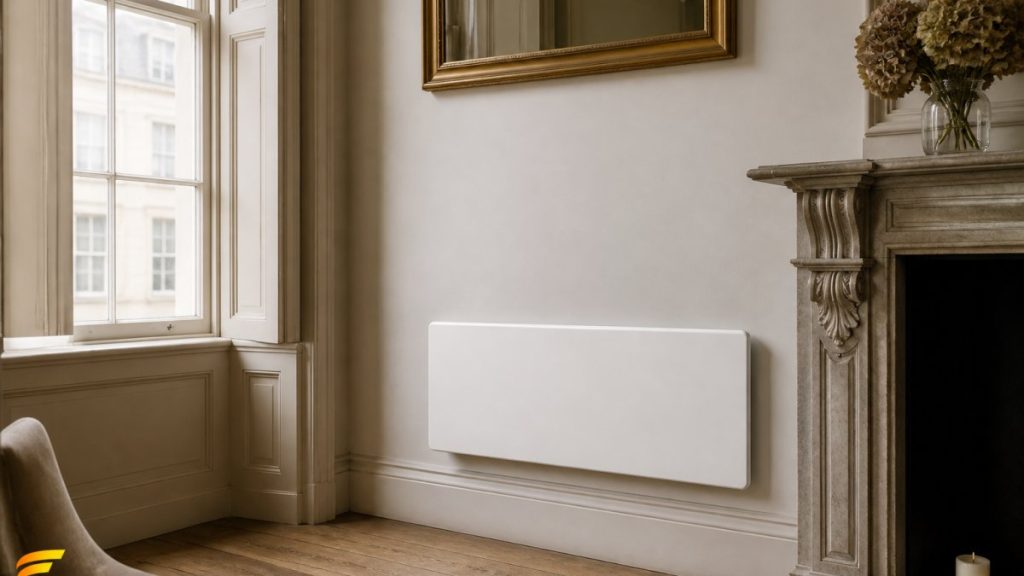
Infrared panels for listed buildings offer a heating solution that respects period features while delivering modern comfort. Unlike traditional radiators or boilers that require pipework and bulky installation, infrared panels mount discreetly on walls or ceilings, leaving original architectural details untouched.
Listed buildings present a unique challenge: you need effective heating without compromising the character that makes them worth protecting in the first place. Many property owners worry that modern heating systems will clash with original cornicing, fireplaces, or plasterwork. Infrared panels solve this by operating independently of the building’s structure. They emit radiant warmth directly, so there’s no need for radiators, pipes, or boilers hidden behind walls.
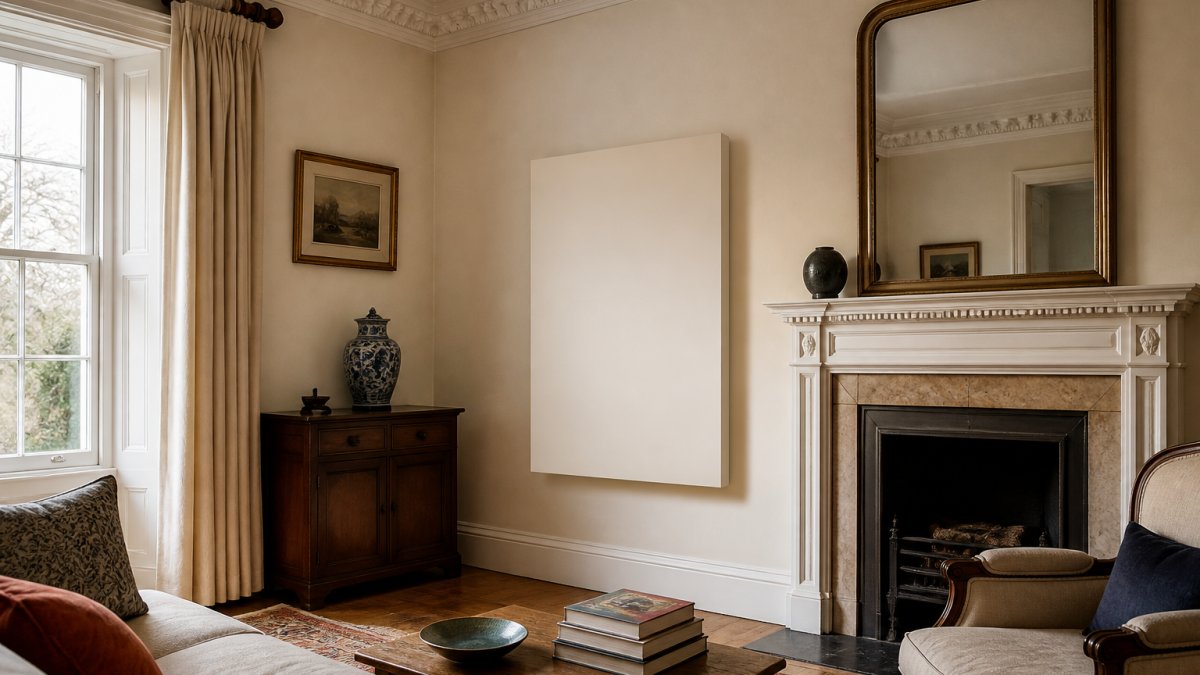
Flexel manufactures infrared panels specifically designed for retrofit applications like these. The systems work by converting electricity into infrared radiation, warming people and objects in the room rather than heating the air. This approach means faster warmth and complete flexibility in placement. For listed properties, that flexibility is invaluable; you can position panels where they’re least visible, or choose ceiling-mounted options that disappear entirely from view.
Listed buildings often have poor insulation and high ceilings that make traditional heating inefficient. Infrared panels deliver warmth exactly where people are, not to empty space above their heads.
Infrared Heating for Listed Buildings: Consent and Compliance
Gaining listed building consent for heating upgrades can feel daunting, but infrared panels simplify the process considerably. The key is that they require no structural changes, no pipework, and no permanent alterations to the building fabric.
When you apply for consent to install infrared panels in listed buildings, your local planning authority will assess whether the work affects the building’s character or historic significance. Traditional central heating systems often require new boiler rooms, pipe routes through walls, and radiator placements that can damage original finishes. Infrared panels sidestep these concerns because they’re non-invasive.
The installation typically involves mounting panels on existing walls or ceilings using standard fixings. There’s no need to chase pipes through period plasterwork or cut new routes for ducting. This minimal-impact approach means many local authorities view infrared panel installations as low-risk from a heritage perspective. However, you’ll still need to discuss placement with your conservation officer, particularly if panels will be visible in principal rooms or from outside the building.
Infrared panels are often approved for listed buildings because they don’t require structural work, pipework, or permanent alterations to the building fabric.
Documentation matters. When submitting your application, clearly explain that the system uses wall or ceiling-mounted electric panels with no boiler, no pipes, and no impact on the building’s structure. Include product specifications showing dimensions and finish options. This transparency helps officers understand that you’re choosing a sympathetic solution.
Wall-Mounted vs Ceiling-Mounted Infrared Panels: Which Works Best
The choice between wall and ceiling mounting depends on your room layout, ceiling height, and how visible you want the panels to be.
Wall-mounted panels sit at eye level or slightly above, typically measuring around 600mm to 1200mm wide and 300mm to 600mm tall. They work well in rooms where ceiling height is limited or where you want the panel to blend with wall décor. In a listed property with period wallpaper or paint colours, a wall-mounted panel can be positioned behind furniture or in less prominent corners. The downside is that they’re visible, so placement requires thought.
Ceiling-mounted panels are the invisible option. Recessed into the ceiling or surface-mounted flush, they deliver warmth from above without occupying wall space or drawing the eye. They work particularly well in period rooms where every wall inch matters, rooms with original fireplaces, built-in shelving, or detailed wall panelling. Ceiling mounting also means the infrared radiation spreads more evenly across the room.
For listed buildings, ceiling mounting often wins on aesthetics. However, access for installation and maintenance matters. If your listed property has original plasterwork or decorative ceiling details, you’ll want a specialist installer who understands how to work around those features without damage.
| Mounting Type | Best For | Visibility | Installation Complexity |
|---|---|---|---|
| Wall-mounted | Rooms with limited ceiling space or where walls are less decorated | Visible; needs careful placement | Straightforward; standard wall fixings |
| Ceiling-mounted | Period rooms with original wall features; maximum discretion | Hidden or nearly invisible | More complex; requires ceiling access and careful routing |
Infrared Panel Placement for High Ceilings and Period Rooms
High ceilings, common in period properties, present a heating challenge. Traditional warm air rises to the ceiling and gets trapped, wasting energy. Infrared panels solve this because they don’t heat air, they heat objects and people directly.
In a room with high ceilings, a standard radiator works inefficiently because heat rises and collects at the top where nobody benefits from it. Infrared panels, by contrast, emit radiation downwards and outwards. The warmth reaches people sitting at table height or standing in the room, not the empty space above. This makes high-ceilinged period properties ideal candidates for infrared heating.
Placement strategy matters. Position panels to cover the main living or working areas of the room. In a period sitting room, this might mean panels positioned to warm the seating area and fireplace surround. In a bedroom, panels over the bed and dressing area ensure comfort where it’s needed. Flexel’s systems allow zoned control, so you can run panels independently in different rooms, meaning you heat only the spaces you’re using.
For rooms with original ceiling features, plasterwork, cornicing, or decorative beams, ceiling-mounted panels should be positioned to avoid obscuring these details. A skilled installer will plan routes around architectural elements. Wall mounting offers an alternative if ceiling placement would damage heritage features.
High ceilings in period properties often mean poor heat distribution with traditional systems. If you notice cold spots near floor level while the ceiling area feels stuffy, infrared panels will deliver noticeably faster warmth to occupied zones.
Key Features to Look For in Infrared Panels
When selecting infrared panels for a listed building, several features determine performance, durability, and suitability for heritage properties.
Build quality and materials matter for longevity. Look for panels with strong aluminium or steel construction, tempered glass fronts if exposed, and reliable thermostats. Flexel panels are manufactured to EN 60335-2-96 and IEC 60800 international standards, ensuring they meet rigorous safety and performance requirements.
Temperature control should be precise and responsive. Quality panels include adjustable thermostats so you can set exact temperatures for different rooms or times of day. Some systems offer wireless control, allowing you to manage heating from a smartphone or tablet, useful if you’re managing a large property or multiple zones.
Finish options are crucial for listed buildings. Panels should be available in colours and textures that complement period décor. Cream, white, and soft grey are common choices that blend with traditional interiors. Some manufacturers offer bespoke finishes or allow panels to be painted to match your walls exactly.
Power ratings range typically from 300W to 2000W depending on room size and insulation. Larger spaces or poorly insulated rooms need higher-output panels. A specialist can calculate the right wattage for your specific room dimensions and heat loss.
Safety certifications are non-negotiable. Panels should carry CE marking and comply with UK electrical standards. This isn’t just about protection, it’s essential for insurance and for demonstrating due diligence if you’re renting the property or managing it commercially.
Installation and Integration with Existing Systems
Installing infrared panels in a listed building requires care, particularly if you’re integrating them with existing heating or if the property has original features that need protecting.
Most installations involve wall or ceiling mounting using standard fixings. The electrical connection typically runs through existing circuits or new runs concealed within walls. In a listed property, you’ll want an electrician experienced with heritage buildings, someone who understands how to route cables without damaging original plasterwork or period wiring.
Integration with existing systems depends on what you currently have. If you’re replacing an old boiler system entirely, infrared panels can become your primary heat source. If you’re keeping the existing system as backup, panels can work alongside radiators, allowing you to zone heating and reduce reliance on the boiler for certain rooms or times of day.
Many properties benefit from a phased approach. Install panels in the main living areas first, then expand to bedrooms or secondary spaces as budget allows. This spreads costs and lets you test the system’s performance before committing to full replacement.
Flexel offers free quotation and survey services to assess your property and recommend the right panel configuration. A surveyor will evaluate room dimensions, ceiling height, insulation, and any heritage considerations before proposing a solution.
Listed buildings with high ceilings, original wall features, and properties where minimal structural work is essential. Particularly effective in period properties where traditional heating would require visible pipework or boiler rooms.
Frequently Asked Questions
Do I need listed building consent to install infrared panels?
Most infrared panel installations require listed building consent because they involve alterations to the building’s interior or exterior. Contact your local planning authority early; they assess whether the panels compromise the building’s character or historic features. Wall-mounted panels that sit flush and are finished discreetly typically face fewer objections than ceiling-mounted options. Obtain written consent before installation to avoid enforcement action.
Are infrared panels suitable for listed buildings?
Yes, infrared panels work well in listed buildings because they require no pipework, boilers, or radiators, elements that often conflict with period aesthetics. Their discreet design means they can be positioned away from original features. They deliver direct, zone-specific warmth without disrupting the building’s character. However, you must secure listed building consent and choose placement carefully to preserve historic elements.
Can infrared panels heat a room with high ceilings?
Infrared panels are particularly effective in high-ceilinged spaces because they direct heat downward to occupants and surfaces rather than warming unused air above. Ceiling-mounted panels work efficiently in rooms 3.5 metres or taller, as they focus warmth where it’s needed. Wall-mounted options also perform well but may require more panels to achieve consistent coverage. Positioning is crucial: panels should target occupied zones rather than empty upper volumes.
What’s the difference between wall-mounted and ceiling-mounted infrared panels for listed buildings?
Wall-mounted panels are less visually intrusive and often easier to obtain consent for, as they don’t alter the ceiling structure. Ceiling-mounted panels maximise floor space and heat distribution efficiency, particularly in high-ceilinged rooms, but require structural assessment and may face greater planning scrutiny. For listed buildings, wall-mounted options typically present fewer consent challenges, though placement must avoid prominent walls or original features. Your architect or planning officer can advise on which suits your building’s character.
To discuss your next project Contact Us to get the conversation started.
Flexel: Heating people first since 1978